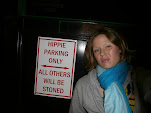
I think the latinos and latinas can tell that I´m about to turn thirty years old. They have gone from calling me Señorita to Señora. Maybe the eighteen-year-olds will finally leave me alone.
Monday, May 25, 2009

Wednesday, May 20, 2009
Run for the border.
Life as en expatriate in Guatemala requires little to no maintainence. However, since the government here is poor, they like to make us do things to get more of our money and to keep tabs on us "rich" foreigners.
As I write this, I am currently sitting in a city in Guatemala called Quetzaltenango, Xela for short. This city is amazingly beautiful, small, and far less dangerous than the captial. Plus there is a lady here who does waxing, god bless her. Xela is also on the way to the border of Mexico, where I am headed tomorrow.
You see, though it seems as though the Guatemalan government can´t get anything right, they make us foreigners leave the country every six months to renew the stamps on our passports. Actually after three months the stamps expire, but we are allowed one renewal stamp in the immigration office in the capital. But after three more months, they want us out before we come back in.
Fine by me, I kind of need a break from the small town life. Xela has it all except the overwhelming pollution. They even have Hiper-Paiz, the Guatemalan version of Wal-Mart. The longer I am in Guatemala, the more reasons I have to never live anywhere else.
And though I like to think that this barber has no borders, the Mexican one is looming, calling me, "Sarah, come to me and renew your stamp so you can stay in Guatemala". So I will head to Tapachula tomorrow, a low elevation city just across the border of Mexico and Guatemala. I will sit there for three days with my pig flu and my pesos, and sweat in the summer heat.
As I write this, I am currently sitting in a city in Guatemala called Quetzaltenango, Xela for short. This city is amazingly beautiful, small, and far less dangerous than the captial. Plus there is a lady here who does waxing, god bless her. Xela is also on the way to the border of Mexico, where I am headed tomorrow.
You see, though it seems as though the Guatemalan government can´t get anything right, they make us foreigners leave the country every six months to renew the stamps on our passports. Actually after three months the stamps expire, but we are allowed one renewal stamp in the immigration office in the capital. But after three more months, they want us out before we come back in.
Fine by me, I kind of need a break from the small town life. Xela has it all except the overwhelming pollution. They even have Hiper-Paiz, the Guatemalan version of Wal-Mart. The longer I am in Guatemala, the more reasons I have to never live anywhere else.
And though I like to think that this barber has no borders, the Mexican one is looming, calling me, "Sarah, come to me and renew your stamp so you can stay in Guatemala". So I will head to Tapachula tomorrow, a low elevation city just across the border of Mexico and Guatemala. I will sit there for three days with my pig flu and my pesos, and sweat in the summer heat.
Thursday, May 14, 2009
First taste.
 Latin American countries are somewhat infamous for having corrupt governments, police, and just about everything else, right down to convienence store owners. Living in Guatemala, I have seen and heard a bit of this and a bit of that involving corruption on small levels. For example, paying off the cops for false or legitimate arrests, people paying for lawyers and the lawyers skipping town, etc, etc. However, I am experiencing my first taste of federal government level corruption as we speak.
If any of you read or watch the news, maybe you have heard. Two days ago a video was released to the media of a lawyer named Rodrigo Rosenberg(pictured above). In this video, Rosenberg said something along the lines of, "If you are seeing this video, it is because I have been murdered by order of the president(of Guatemala)". In the video he said much more, including other accusations and giving support to the Vice President of Guatemala to heal and take back the country.
True, this man is dead, and in proper Guatemalan fashion, they printed pictures of his dead body in the newspaper, laying right beside his bicycle where he was murdered in broad daylight.
¿¿¿WTF???
A day after the release of the video, the President of Guatemala(Alvaro Colom, pictured below)denied having anything to do with this mans death. Also, a day after this story broke to the media, there were massive protests in front of the presidents house calling for his resignation. The Guatemalan government also promtply
 flew mayors in from towns and cities all over Guatemala, to the capital to support the president. All this done on the tab of the Guatemalan tax payers, and at no small price.
Forgive me, but this is so fucked. Basically, there is hard core, prerecorded proof that this mans assination is directly related to the President, and done by his order. Now, we must consider that it is potentially a conspiracy created by this Robert Rosenberg himself, in order to stir up the government. However, the history of Latin American governments points to this story and his accusations being true.
There have been promised "unadulterated and unbiased" investigations into these recent happenings. And my response to that is: how can anyone possibly believe that these investigations will not be corrupt? This country was born from corruption and unfortunately it may fall from the same corrupt practices. What could happen? It will be so interesting to find out.
Get on Google and read something. This is too crazy to be true, and it has every single person in Guatemala talking. Imagine a video of a very notable and famous lawyer coming out saying that if we are seeing this it means he is dead and that our president is responsible. Seems it could never happen. Nuts.
In turn, nobody knows what will happen. Will the president step down? Will more people turn up dead? Will the investigations acutally be legitimately un corrupt, unbiased and clear? How can we feel safe in this kind of political environment? The questions in the minds and heard from the voices of people here, myself included, are unending.
The Prensa Libre(the main Guatemalan newspaper)printed today that the FBI is getting involved in the investigations. However, that does not really mean anything. I am sure the Guatemalan government has worked with the FBI before to the disadvantage of the people. Hmm, let me think, oh yeah, the nearly 40 year civil war this country went through.
I cannot deny that part of me is furious at all of this. And most of my anger comes from the fact that whoever killed this man will likely walk free the rest of his life as many murderers do in this place, whilst this corrupt president continues to rule this oh so fragile country. . .
May Rodrigo Rosenburg rest in peace.
Thursday, May 7, 2009
Trash.
Anyone that has ever traveled to a third world country, I´m sure is shocked at the amount of trash everywhere. Even in such a pristine place as this lake and these mountains, there is plenty of trash, in the lake and on the mountains.
It seems as though nobody cares. But that is not the case. The case is this, there are not very many ways to actually properly dispose of one´s trash here. Walking down the pathways and the streets, I think I have seen two public trash cans. In a town of about 13,000 that number is very low. Leading to people throwing their trash anywhere. Another factor in this lack of care for the environment stems from the economic situation here. Why should we worry about trash in the lake and streets when many people here worry about what they will eat that day?
Many people here burn their trash. Sounds horrendous, but it´s going to pollute the earth in one manner or another, so the difference between burning and throwing is cancelled out. Plus this place creates such a small amount of trash, relatively speaking, that the piles being burned are often very small and only burn for a few minutes before tapping out.
In my house, with two other people and me, we create about one or two bags of trash per month. Not many, but still difficult to get rid of. This is how it works. There are no trash companies that come by every week, twice a week to collect our waste. Plus we live on a dirt pathway, not a street. The collection of trash is managed by the town municipality and consists of a huge dump truck and a small pick-up truck that drive around town honking a special, distinguishable horn to signal that it is near and that all should come running with their bags of trash. When we hear the horn, Gary(my roommate)and I look at each other with that look. The look that says, "We need to get our asses to the street! Like now!". The anxiety of missing the trash truck is too much.
We then promptly grab the bag or bags or whatever else we are trying to get rid of and run down the pathway to hopefully not miss the truck. There is no regular schedule for the trucks passing so if we miss it, we must just wait until next time. I hate having to carry trash back to the house.
If we are lucky enough to not miss it, we happily give our trash to the men and pay 1 quetzal(Guatemalan currency)per bag. Likely this payment of roughly 12 cents per bag is a tip for the collectors of trash, fine by me, they deserve it. After the trucks are full, they drive up the road on the volcano, pull over, and dump the trash in a sort of designated area, right off the side of the road. Upon seeing this heap of filth the first time, covered with street dogs and vultures, I came to realize why people throw their trash just anywhere. It seems as though people would rather spread it out as opposed to concentrating it in one area. Plus, I know there are families here who chose to not pay to throw their trash.
Sounds crazy, coming from such a well managed country, in terms of waste disposal. Then this thought crosses my mind; trash in our country is so well managed because if it wasn´t, considering the sheer amount of waste the United States creates, the country would be have been buried beneath its own filth long ago.
And ultimately, I draw this conclusion: though some of the things I have just written about how trash is delt with may seem horrifying, the people here in San Pedro and in Guatemala in general produce a signficantly less amount of trash than most Americans could ever dream. So, though it may dishearten me to see kids and adults alike throwing their chip bags and water bottles anywhere, it may be the only trash they throw all week.
It seems as though nobody cares. But that is not the case. The case is this, there are not very many ways to actually properly dispose of one´s trash here. Walking down the pathways and the streets, I think I have seen two public trash cans. In a town of about 13,000 that number is very low. Leading to people throwing their trash anywhere. Another factor in this lack of care for the environment stems from the economic situation here. Why should we worry about trash in the lake and streets when many people here worry about what they will eat that day?
Many people here burn their trash. Sounds horrendous, but it´s going to pollute the earth in one manner or another, so the difference between burning and throwing is cancelled out. Plus this place creates such a small amount of trash, relatively speaking, that the piles being burned are often very small and only burn for a few minutes before tapping out.
In my house, with two other people and me, we create about one or two bags of trash per month. Not many, but still difficult to get rid of. This is how it works. There are no trash companies that come by every week, twice a week to collect our waste. Plus we live on a dirt pathway, not a street. The collection of trash is managed by the town municipality and consists of a huge dump truck and a small pick-up truck that drive around town honking a special, distinguishable horn to signal that it is near and that all should come running with their bags of trash. When we hear the horn, Gary(my roommate)and I look at each other with that look. The look that says, "We need to get our asses to the street! Like now!". The anxiety of missing the trash truck is too much.
We then promptly grab the bag or bags or whatever else we are trying to get rid of and run down the pathway to hopefully not miss the truck. There is no regular schedule for the trucks passing so if we miss it, we must just wait until next time. I hate having to carry trash back to the house.
If we are lucky enough to not miss it, we happily give our trash to the men and pay 1 quetzal(Guatemalan currency)per bag. Likely this payment of roughly 12 cents per bag is a tip for the collectors of trash, fine by me, they deserve it. After the trucks are full, they drive up the road on the volcano, pull over, and dump the trash in a sort of designated area, right off the side of the road. Upon seeing this heap of filth the first time, covered with street dogs and vultures, I came to realize why people throw their trash just anywhere. It seems as though people would rather spread it out as opposed to concentrating it in one area. Plus, I know there are families here who chose to not pay to throw their trash.
Sounds crazy, coming from such a well managed country, in terms of waste disposal. Then this thought crosses my mind; trash in our country is so well managed because if it wasn´t, considering the sheer amount of waste the United States creates, the country would be have been buried beneath its own filth long ago.
And ultimately, I draw this conclusion: though some of the things I have just written about how trash is delt with may seem horrifying, the people here in San Pedro and in Guatemala in general produce a signficantly less amount of trash than most Americans could ever dream. So, though it may dishearten me to see kids and adults alike throwing their chip bags and water bottles anywhere, it may be the only trash they throw all week.
Tuesday, April 28, 2009
The story of coffee
 Just how does that wonderful burnt, brown liquid make it to my addiction?
I know that most people in the States think that coffee comes from coffee shops and tightly sealed foil baggies, pre-ground on flourescent-light lit grocery store shelves. Surprise, coffee actually grows on trees. Wouldn´t it be nice if all things we love grew on trees?
Guatemala is coffee country. Some of the finest coffees in the world are grown here, and literally right here on the volcano on which I live. There´s coffee fields everywhere and coffee trees grow between houses, along pathways, etc. Basically coffee trees are more plentiful than Mayan children, and that´s saying something. I find it futile to post a photo of an actual coffee tree as I waited until just after the coffee harvest ended here to make this post(my deepest apologies). There is barely any cherries left on the trees so it would just look like a picture of green. But besides that, here´s how it goes.
Coffee is a huge income generator here in a very poor place. Men will spend weeks and months on end in the fields, during the harvest, gently pulling coffee cherries from trees and filling huge bags with them. That´s right, coffee begins as a cherry, literally looks like a cherry. When the cherries are ripe, they are harvested. But what then?
After the cherries are harvested, the men come down from the fields on the volcano at the end of each day to have their harvest weighed and then further processed. It takes about two full days of harvesting in order to fill a 50lb. bag. The harvesters make about the equivelant of about $25 to $30 per bag of raw cherries. That´s two days of extremly hard, hand shredding work, whilst carrying a heavy sack of cherries, for $30.
After the collection of raw cherries at the processing "plants" scattered throughout our tiny town, the cherries are then spread out in a thin layer on the ground in order to dry. Pictured above is a close up of coffee cherries drying, the light colored beans are the raw(pre-roasted)coffee beans and the darker colored beans are still wrapped in a dried cherry husk. And below is a larger view of the cherries drying at various stages, which I will explain.

The cherries dry for a certain number of days and when they are ready, they are processed in the first round of washings which the cherries/beans will recieve. The processing plants are basically a small, open-air building with a series of automated machines which the cherries pass through in order to wash the husk off the bean inside. It is a sight to see the men working through the night, washing, lifting baskets of cherries, raking through piles of cherries, and on and on and on.
Well, once is not enough to get the fruit off of the bean, thus the process of spreading, drying, and washing is repeated a number of times in order for the beans to be ready to roast. Wash, rinse, repeat comes to mind. In the middle picture, the darkest pile is the newest pile to be drying, whilst the pile on the right of the photo is mid-process(similar to the first photo/close up)and the very light colored pile is nearing its final stages just before roasting here in San Pedro, or shipping to a first world, coffee fueled country for roasting.
But that´s not the best part. The best part(heavy sarcasm), is what happens to the coffee cherries that come off of the beans. The picture below is of an enormous pile of fermenting cherries that have been washed off of the beans as they are processed. Oh, the smell, wow, the smell. . . We are talking tons of fermenting fruit here people. It´s a bit overwhelming upon first whiff, but I have come to appreciate it as a part of my life here, knowing full well
 that I have to accept all aspects of my addiction to this wonderful product of the Earth.
The fruit is later collected and redistributed on the coffee fields as a fertilizer, hence the sign advertising a gift of coffee fruit/pulp. It´s like saying "Look what we have for free, rotten fruit!". And the Guatemalans snap it up.
All in all, the process of harvesting, drying, washing, drying, washing again takes about a month before the beans are ready for roasting. Personally, the most romantic part of this process for me is when the beans are almost ready for roasting and I see a Mayan woman on a roof top picking up baskets of raw, dried beans and slowly pouring them through the air so the breeze can carry away all the dust and leftover bits. Some things cannot ever be automated.
A pound of local coffee sells here for about $3.50, sometimes less, sometimes more, grown right on the volcano, roasted by an old man in the back of his house, now that´s fresh coffee. And, I will say this, the smell of roasting coffee coming out of houses and coffee shops here is plenty to make up for the stench of the rotting fruit. You suckers worshiping Starbucks think that stuff is fresh, ha, ha, losers! We´ve already pissed out our coffee here by the time that stuff even makes it on a boat.
I find all this very fascinating and as I learned more and more about what was acutally happening all around me, every day, I definately appreciate more and more each cup of coffee or latté that I enjoy. The amount of extremly hard labor and the amount of love put into coffee growing, harvesting and processing here is impressive, to say the least.
As previously mentioned, the coffee harvest has ended. Which for me, means that no more HUGE trucks loaded with bags of cherries arriving from the volcano each afternoon, no more endless nights of watching the processing plants run, no more drying coffee. What it also means is that now the rain has started, the piles of fruit are fermenting at an even higher lever of stinkiness. However, the piles are also shrinking as farmers and the like are taking away the tons of fruit to fertilize their fields in order to begin again after a few months of blessed rain.
So now that I have made your cups of coffee much more than just cups of coffee, you can all look longingly into your burnt, brown goodness and imagine what it took to get it from these fields, through the hands of hard working Mayans and into your office, thus fueling your comments on my blog and your emails expressing your greatest thanks for your new coffee knowledge.
Friday, April 24, 2009
Muchachos
As a tall, blonde woman, there are many benefits to be enjoyed pretty much anywhere in the world, and the comedy of Guatemala is no exception.
These Tzu´tzuhil Mayans are damn near comedians, seriously so funny. And there is little that is so endearing as the random "I love you" yelled to me in passing in the streets by any man or boy here. Often times it is also followed or preceeded by a "hey baybee!". The level of English known by these people is extremly minimal, but "I love you" and "hey baby" seem to be some of the first things they learn. Not to mention also important for the advancement of their chances with any extranjera(foreign woman). Somehow I don´t think they are teaching this in school.
One of the most hilarious occasions was as my friend Emily and I were walking one day and we hear hollers of "Babies in the street!" from a group of local men. Immediately we begin looking for the babies in the street, certainly they need to be moved to the sidewalk. But after a few seconds, we realized that WE were the babies in the street. Apparently those men do not understand the difference between babies and babes. Ahhh, English as a second language, barely. At least they practice every chance they get.
It nice to be so loved :)
These Tzu´tzuhil Mayans are damn near comedians, seriously so funny. And there is little that is so endearing as the random "I love you" yelled to me in passing in the streets by any man or boy here. Often times it is also followed or preceeded by a "hey baybee!". The level of English known by these people is extremly minimal, but "I love you" and "hey baby" seem to be some of the first things they learn. Not to mention also important for the advancement of their chances with any extranjera(foreign woman). Somehow I don´t think they are teaching this in school.
One of the most hilarious occasions was as my friend Emily and I were walking one day and we hear hollers of "Babies in the street!" from a group of local men. Immediately we begin looking for the babies in the street, certainly they need to be moved to the sidewalk. But after a few seconds, we realized that WE were the babies in the street. Apparently those men do not understand the difference between babies and babes. Ahhh, English as a second language, barely. At least they practice every chance they get.
It nice to be so loved :)
Thursday, April 16, 2009
Holy Week, Batman!!

Whilst all of you were gorging on candy and spinning tales to small children of human sized bunnies that bring said candy late at night, here in Guatemala, Easter is a bit different. And yes, that is a fake dead Jesus to our left here being carried on the shoulders of Guatemalans.
The week leading up to the Easter holiday is called Semana Santa(Week of Saints), and is without a doubt, the largest holiday of the year. Every Guatemalan takes the week off and our town is invaded by folks from the city(welcomed with a grain of salt and a forced smile). Guatemala also boasts the largest celebrations of Semana Santa in world, the most grandiose being in Antigua.

 Without going into too much detail, every single town has processions starting on Thursday before Easter, multiple times a day, until Sunday morning when Jesus is finally risen.
The processions are done only by the Catholics, the Evangelicals seem to think carrying heavy things on their shoulders for hours is unecessary. Above is a picture of a pre-procession procession, with the Mayan ladies carrying baskets of fruit used to later decorate the town for the larger processions. The photo on the right above is of an alfombra. An alfombra is a "carpet" made in the streets of colored sawdust, pine needles, flower petals and the like. The alfombra pictured here is one that was in San Pedro last year and does not hold a flame to the amazing detail put into the alfombras in other towns and would not even be considered an alfombra by Antigua standards. I do what I can here, the rest is up to your imagination and to the wonderful world of Google images.
So in short, these processions involve hours of the slowest marching one has ever seen whilst groups of Mayans carry huge and heavy displays of Jesus on their shoulders in order to feel some of the suffering they believe Christ may have felt during his ordeal all those years ago. The alfombras are made in the streets in order to be marched/walked over, ultimately being destroyed.
A bit loco, I know. However it i
 s quite a sight to see if you have the ability to watch the slowest parade of all time, more than one time a day for more than one day. Rumor has it there was a procession in Antigua this year that lasted for fourteen hours. These Guatemalans are dedicated to suffering.
Along with all the carrying of things, there are many "costumes" as well, pictured below. What the significance of all this is remains a mystery to me. But all in all, a very interesting and different tradition than all of our candy laden holidays in the states. Imagine a religious holiday still holding its religious significance, mind blowing. I´d rather eat candy.

Subscribe to:
Posts (Atom)